


Metal Barricade Rental vs. Buying: Which Option Makes More Financial Sense?

Nick Criscuolo, November 11, 2026
Read more about the author


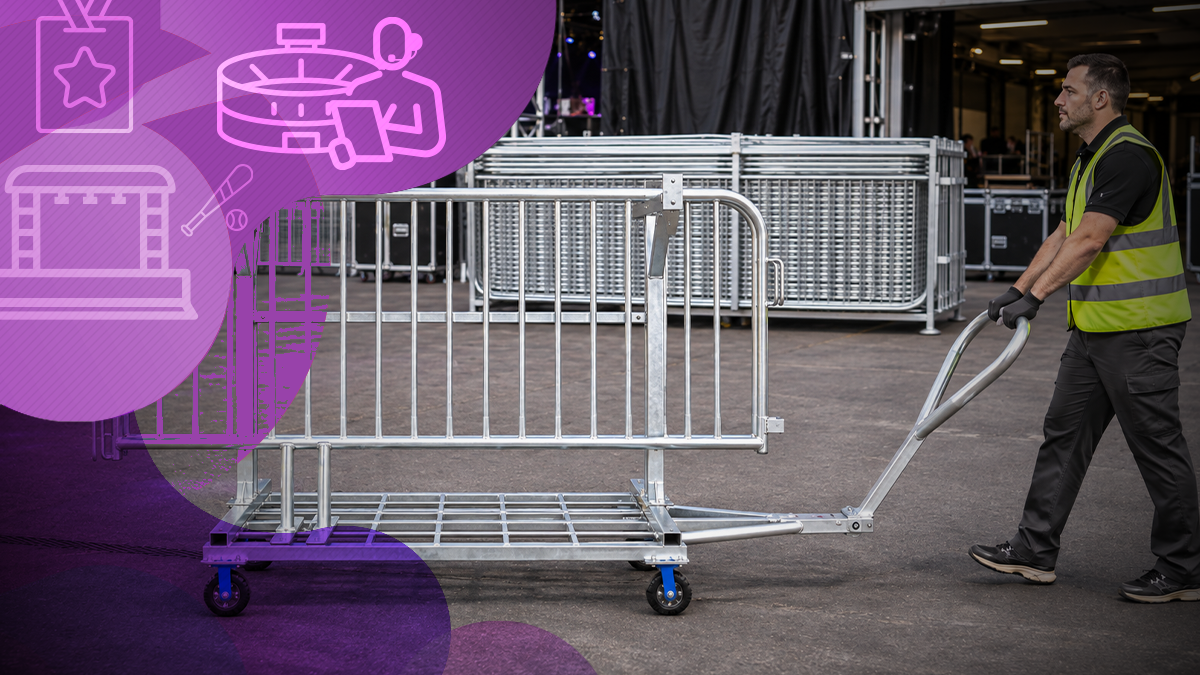
For event organizers, venues, production companies, and equipment rental businesses, metal barricades are an important part of managing crowds and maintaining safe event areas. But when you need them regularly, one question becomes increasingly important: Is it more cost-effective to rent metal barricades for each event or invest in your own inventory?
The answer depends on more than the initial purchase price or rental rate. Event frequency, equipment utilization, storage, transportation, maintenance, and long-term operating costs all affect the total investment.
In this guide, we'll compare the costs of renting and buying metal barricades, explain how to estimate your break-even point, and help you determine which option makes the most financial sense for your operation.
Metal Barricade Rental: What Costs Should You Expect?
Renting metal barricades can be a practical choice when you need equipment for occasional events or temporary projects. It avoids a large upfront purchase and reduces the responsibility of storing and maintaining inventory.
However, the rental rate is only one part of the total cost. Depending on the provider and rental agreement, additional expenses may include:
- Rental fees: Charges may be calculated per barricade, per day, or for a longer rental period.
- Delivery and pickup: Transportation fees can increase the total cost, especially for large orders or locations far from the rental provider.
- Setup and removal: Some agreements include labor, while others charge separately for installation and breakdown.
- Damage or replacement fees: Missing, damaged, or improperly returned equipment may result in additional charges.
- Extended rental periods: Delays or changes to an event schedule can increase costs if equipment is kept longer than originally planned.
For occasional use, these expenses may be easier to manage than purchasing and maintaining an inventory. But when rental costs recur throughout the year, it is worth comparing them against the long-term cost of ownership.

Buying Metal Barricades: Understanding the Total Cost of Ownership
Purchasing metal barricades requires a larger initial investment, but it gives your organization access to equipment whenever it is needed.
Instead of paying rental fees for every event, you own the inventory and can distribute its cost across multiple uses. To make a fair comparison, however, consider the full cost of ownership rather than the purchase price alone.
Key expenses include:
- Initial purchase: The upfront cost depends on the number of barricades, product specifications, and order quantity.
- Storage: You need enough space to keep equipment organized and protected between events.
- Transportation: Moving barricades between your storage facility and event locations may require suitable vehicles, labor, and handling equipment.
- Maintenance and replacement: Regular inspections, repairs, and replacing damaged or missing units contribute to ongoing costs.
- Inventory management: Businesses with larger inventories may also need to account for the time and labor involved in tracking and preparing equipment.
Although ownership involves these additional responsibilities, frequent use can make the investment more economical over time.
Buying vs. Renting Metal Barricades: Key Differences
The best option depends on how frequently you need barricades and how much responsibility your organization can take on for managing inventory.
|
Cost or consideration |
Renting |
Buying |
|
Initial investment |
Lower upfront cost |
Higher upfront cost |
|
Payment structure |
Recurring rental fees |
One-time purchase, plus ongoing expenses |
|
Storage |
Usually handled by rental provider |
Your organization is responsible |
|
Transportation |
May be included or charged separately |
Your organization coordinates transportation |
|
Maintenance |
Typically covered according to the rental agreement |
Your organization manages maintenance |
|
Equipment availability |
Depends on provider inventory and scheduling |
Available when your inventory is available |
|
Frequent use |
Repeated rental costs can add up |
Costs can be distributed across multiple uses |
|
Inventory flexibility |
Easier to adjust quantities for individual events |
Limited by the quantity you own |
Renting generally offers flexibility without requiring an inventory investment. Buying provides greater control over equipment availability and can reduce recurring rental expenses when the barricades are used regularly.
When Does Buying Metal Barricades Make More Financial Sense?
Buying may be more economical when your organization uses metal barricades frequently enough to offset the initial purchase and ongoing ownership costs.
Consider these factors before making a decision:
1. How many events do you organize each year?
If you need barricades for only one or two events, renting may be more practical. But if your organization manages a recurring calendar of events, rental expenses can accumulate quickly.
2. How many barricades do you need?
The quantity required for each event affects both rental and purchase costs. Organizations that regularly need large quantities may benefit from owning a dedicated inventory.
3. How often will your inventory be used?
Equipment that sits in storage for most of the year may not generate enough value to justify its purchase price. The more frequently your barricades are deployed, the more opportunities you have to distribute the initial investment across multiple uses.
4. Do you have storage and transportation capacity?
Ownership makes more sense when you already have suitable storage space, vehicles, and staff to handle equipment. If these resources are not available, renting may remain the more practical option.
5. How predictable is your equipment demand?
Organizations with recurring events or consistent equipment requirements can plan inventory more effectively. Businesses with highly seasonal or unpredictable demand may prefer the flexibility of renting.

How to Calculate the Break-Even Point for Metal Barricades
One way to compare renting and buying is to estimate how many events it would take for ownership to become less expensive than renting.
A basic break-even calculation is:
- Break-even events = Total cost of ownership ÷ Rental cost per event
For a more accurate estimate, account for variable costs associated with each use:
- Break-even events = (Initial purchase cost + fixed ownership costs − estimated resale value) ÷ (Rental cost per event − variable ownership cost per event)
Fixed ownership costs may include storage expenses, while variable ownership costs may include transportation, handling, and maintenance allocated to each event.
Example: Buying vs. Renting
Imagine an event company is considering purchasing a metal barricade inventory.
Estimated total ownership cost: $6,000
Rental cost per event: $600
Estimated variable ownership cost per event: $0 for this simplified example
The calculation would be:
- $6,000 ÷ $600 = 10 events
In this example, the purchase investment would equal the cost of renting for 10 events. After that point, owning the equipment could become more economical, assuming the inventory continues to be used and no significant additional costs arise.
This is a simplified illustration, not a universal cost estimate. Actual break-even points depend on purchase prices, rental agreements, storage, transportation, maintenance, and how often the equipment is used.
Is a Hybrid Approach Better for Your Event Business?
Buying and renting do not have to be mutually exclusive.
Some organizations benefit from maintaining a core inventory of metal barricades while renting additional units when demand increases.
For example, an event production company might own enough barricades for its regularly scheduled events but rent extra equipment for a large festival, seasonal event, or unusually high-capacity gathering.
A hybrid approach can help organizations:
- Maintain access to equipment for recurring events.
- Avoid purchasing inventory that may only be needed occasionally.
- Adjust quantities according to event size and seasonal demand.
- Manage storage requirements while maintaining greater control over frequently used equipment.
This approach can be particularly useful for businesses with changing event schedules or fluctuating equipment requirements.
Frequently Asked Questions
Is it cheaper to rent or buy metal barricades?
Renting may cost less for occasional events because it avoids a large upfront investment. Buying can become more economical when barricades are used frequently enough to offset the purchase price and ongoing ownership expenses.
How many events does it take for buying metal barricades to pay off?
There is no fixed number. It depends on the initial purchase cost, rental fees per event, storage, transportation, maintenance, and expected equipment usage. A break-even calculation can help estimate when ownership becomes more economical.
What additional costs should I consider when buying metal barricades?
Beyond the purchase price, account for storage, transportation, handling, maintenance, repairs, and replacement of damaged or missing equipment.
Is renting metal barricades better for occasional events?
It can be. Renting is often practical when equipment is needed infrequently, storage capacity is limited, or event requirements change significantly from one occasion to another.
Can I buy some barricades and rent additional units when needed?
Yes. A hybrid approach allows organizations to own enough inventory for recurring events and rent additional barricades when demand increases. This can help balance equipment availability, storage requirements, and costs.
Make a More Informed Metal Barricade Investment with SONCO
Choosing between renting and buying metal barricades starts with understanding how often you need the equipment, how much inventory you can manage, and what your long-term operating costs look like.
If your organization regularly uses metal barricades, purchasing may be a worthwhile investment. Compare the expected costs of ownership with your current rental expenses to identify where the greatest long-term value lies.
Explore SONCO's metal barricade selection to compare available models and find equipment that fits your event requirements and purchasing needs.

Trend now

Temporary Fence Rental Lifespan: Tips to Make Your Fence Last Longer
Learn the storage habits that extend the lifespan of every panel.

How to Manage a Crowd at an Event: A Complete Guide for Event Managers
Learn how to manage a crowd at an event with proven strategies for planning, signage, barriers, staffing and more.

How to Install a Mesh Chain-Link Fence: Step-by-Step Guide
Learn how to install a mesh chain-link fence step by step.
Search for category
Request a quote now! 