






The Fan Experience Starts in the Parking Lot: Here's the Data

Nick Criscuolo, August 18, 2026
Read more about the author


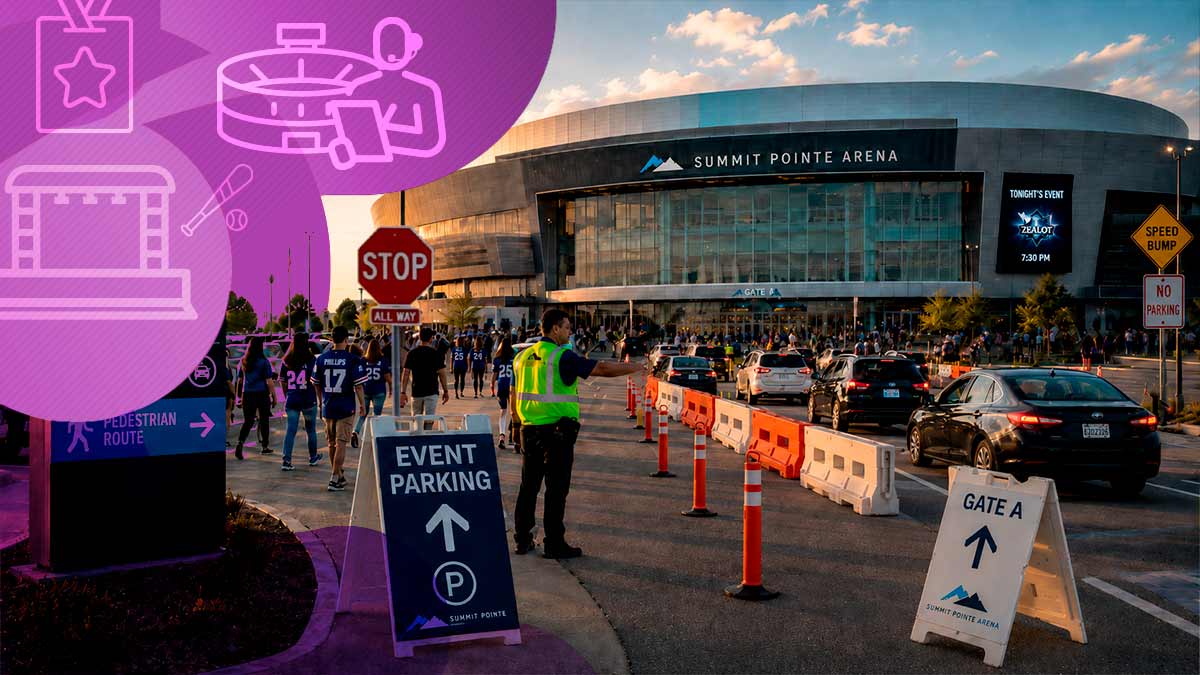
Most venue and event managers pour their budget and attention into what happens inside the gates: the show, the game, the play, the concessions, the atmosphere.
That focus makes sense, but it also leaves a blind spot. Long before a fan finds their seat, their experience has already begun, and it begins in the parking lot.
The drive in, the search for a spot, the walk to the gate, all of it shapes the mood a fan carries into the venue. A frustrating parking experience can sour an otherwise perfect night before the lights even go down.
A smooth one sets the tone for everything that follows.
For event managers and venue managers, understanding this is not a nice to have, it is a competitive advantage, and the data backs it up.
Key Takeaways:
- The fan experience starts before entering the venue. Parking, traffic, and wayfinding can shape a fan’s mood before the event even begins.
- The basics have the biggest impact. Safety, comfort, cleanliness, seat quality, and atmosphere matter more to fans than most other aspects of the experience.
- Simple solutions can make a big difference. Prepaid parking, clear signage, traffic management, and accessible spaces can reduce waiting, confusion, and frustration.
- Technology can connect the whole experience. Digital signage, real-time parking information, mobile integration, and traffic data help venues make parking faster, smoother, and more convenient.
What fans and casual audience are waiting for
To understand what actually drives fan satisfaction, it helps to look at the numbers. Deloitte surveyed more than 15,000 sports fans across seven major leagues, including MLB, NBA, NFL, NHL, MLS, NASCAR, and the WNBA, to map out what fans expect from a live event.
The research identified a "core four" set of expectations that matter more to fans than anything else:
- Fans expect the stadium to be safe, comfortable, and clean,
- They want the view from their seats to match their expectations,
- They desire a high quality game,
- They expect an exciting atmosphere within the venue.
On average, these four attributes are rated as more than 50 percent more important than any other aspect of the event experience.
Casual Audience vs. Fans
There is a detail in this research that matters enormously for venue operators. Casual fans, who are not season ticket holders or diehards, place even higher relative importance on these core expectations, and their satisfaction levels are lower than more committed fans.
In other words, the fans who are hardest to win over are also the ones judging the basics most harshly, and the parking lot is one of the very first basics they encounter.
This connects directly to something the industry already knows about wait times.
A 2025 report on MLB concessions found that over half of surveyed fans estimated waiting fifteen minutes or more in line, meaning they missed close to a full inning every time they left their seat for food or drinks, and 79 percent said they had missed a crucial or memorable play because of that wait.
If a few minutes in a concession line can cost a fan a memorable moment and sour their mood, the same logic applies with even greater force to the twenty or thirty minutes many fans lose circling a lot or queuing to pay for parking. Comfort, cleanliness, and atmosphere all start to erode before the fan has even parked the car.
The most efficient practices and solutions
Fixing the parking experience does not require rebuilding a venue. It requires the right combination of process, signage, and technology working together.
Here is how the leading practices break down:
| Solution area | What it solves | Typical impact |
| Prepaid parking | Cash and card transactions at the gate, slow lot fill times | Passes are scanned instead of processed, cutting entry time per vehicle |
| Wayfinding and signage | Drivers circling, uncertainty about which lot or level to use | Reduces idling, congestion, and frustration before the fan reaches the gate |
| Traffic control | Congestion around the venue, unsafe pedestrian and vehicle mixing | Smoother flow in and out, fewer safety incidents |
| Accessibility | ADA and visitor spaces that are hard to find or too far from entrances | Better experience for guests who need it most, fewer complaints |
| Technology | Fragmented, manual processes across all of the above | Faster entry, real time guidance, data for future planning |
Prepaid parking
The simplest lever to pull is also one of the most effective. Many venues now sell parking at the same time as the ticket, and for fans who skip that step, organizations follow up with reminders through Know Before You Go emails, push notifications, text notifications, and social media posts.
The payoff shows up the moment a car reaches the gate. Prepaid passes reduce the time it takes to fill a lot by cutting transaction times, since the pass is simply scanned instead of processing cash or a card, and vendors are also strengthening broadband networks to speed up onsite card payments when they are used.
Sports Business Journal has reported on venues taking this a step further by directing fans to a specific level or section of a parking structure instead of leaving them to search space by space.
Industry sources estimate that this kind of guidance, combined with prepaid access, can shave twenty to thirty minutes off the time it takes fans to get from their car to their seat. That is a meaningful chunk of the pregame experience returned to the fan.
Map and wayfinding signage
Once a fan is close to the venue, signage takes over as the guide. There are several wayfinding formats venues rely on, including full variable message signs, static signage, and lane indicator signage, all designed to direct patrons to their designated lot as they approach.
Many venues also tap into city infrastructure, since a city's existing highway message signs can help event goers get oriented before they even reach the venue.
Good wayfinding is not decoration. It is the difference between a fan who arrives calm and a fan who arrives already annoyed, and that mood carries into the gates, the concourse, and the seats.
Traffic control is key
Signage alone cannot solve congestion. Smart traffic management is a critical part of running safe and sustainable event operations, and real time traffic monitoring combined with signal management and event specific traffic plans helps reduce congestion and improve safety.
This matters as much for the walk home after the final whistle or the last curtain call as it does for arrival, since a poorly managed exit can undo the goodwill built earlier in the night.

Accessibility can't be forgotten
Accessibility deserves its own line item, not an afterthought status. Clearly marked, well located ADA spaces and visitor parking are essential, both for compliance and for the experience of guests who depend on them.
The same wayfinding and signage principles that help general parking apply here, only the stakes for getting it wrong are higher, since a poorly signed accessible space can turn a simple errand into a genuine barrier.
Technology as your ally
Technology ties every one of these pieces together. Digital signage, real time occupancy data, mobile integration, and connected traffic systems let a venue react to conditions as they happen rather than planning around guesswork.
A useful reference point comes from outside sports and entertainment: Deloitte's research also highlighted how a mobile app integrating parking access, mobile ticketing, and in seat directions helped one NFL team improve the pregame experience for fans and drove measurable revenue gains.
The lesson translates well beyond football. When parking guidance, payment, and wayfinding live in a connected system, fans spend less time being lost and more time enjoying the event they came for.
FAQs
Why does the parking lot matter so much for fan experience?
Because it is the first and last touchpoint of every event. A frustrating arrival or exit colors how a fan remembers the entire night, even if the show or the game itself was excellent.
What is the fastest improvement a venue can make?
Prepaid parking paired with clear directional signage tends to deliver the quickest, most visible improvement, since it removes the two biggest sources of delay: payment friction and confusion about where to go.
Does better parking signage really affect revenue?
Yes. Fans who spend less time stressed about parking arrive earlier and in a better mood, which research links to higher in venue spending and stronger loyalty over time.
How does accessibility factor into parking planning?
Accessible spaces need to be as clearly marked and easy to find as any other part of the lot. Treating accessibility as a core design requirement, not an add on, protects both the guest experience and compliance.
Can existing parking lots be upgraded without major construction?
In most cases, yes. Wayfinding signage, digital message boards, and lane markings can be added or redesigned without touching the physical structure of the lot, making this one of the highest impact, lowest disruption upgrades a venue can make.
Trust SONCO for the best signage solutions
Every practice covered here, prepaid access, wayfinding, traffic control, accessibility, and technology integration, depends on one thing working flawlessly: signage that fans can actually see, understand, and trust. That is where SONCO comes in.
SONCO designs and delivers signage solutions built specifically for the realities of event and venue parking: high traffic volume, tight time windows, and fans who need clear direction the moment they arrive.
From static wayfinding to custom banners, SONCO helps event managers and venue managers turn the parking lot from a source of friction into the first good impression of the night.
If the fan experience really does start in the parking lot, make sure it starts right. Talk to SONCO about a signage strategy built for your venue.

Trend now

Temporary Fence Rental Lifespan: Tips to Make Your Fence Last Longer
Learn the storage habits that extend the lifespan of every panel.

How to Manage a Crowd at an Event: A Complete Guide for Event Managers
Learn how to manage a crowd at an event with proven strategies for planning, signage, barriers, staffing and more.

How to Install a Mesh Chain-Link Fence: Step-by-Step Guide
Learn how to install a mesh chain-link fence step by step.
Search for category
Request a quote now! 